Frequently asked questions for users of heritage data
How can I search the Dataset Register?
If you want to easily explore datasets, you can use the public website of the Dataset Register with a search function and filters. For technical use, you can consult the underlying triplestore. It is available via a web interface: https://qlever.netwerkdigitaalerfgoed.nl/datasetregister
Are there examples of SPARQL queries?
Yes. On the Search page you will find simple examples of search queries. This page works as a SPARQL generator: based on your search question, a query is automatically built and executed on the triplestore. You can also open the generated query directly in the web interface to further customize it.
If you want more insight into the possibilities of the Sparl endpoint and the triple store, check out the datastory. This is currently only available in Dutch, but it does give a good insight into how queries are structured. Via the blue arrow above the results tables you can view the underlying SPARQL query. If you adjust this, you will immediately see the effect on the results.
What kind of data can I find in the Dataset Register?
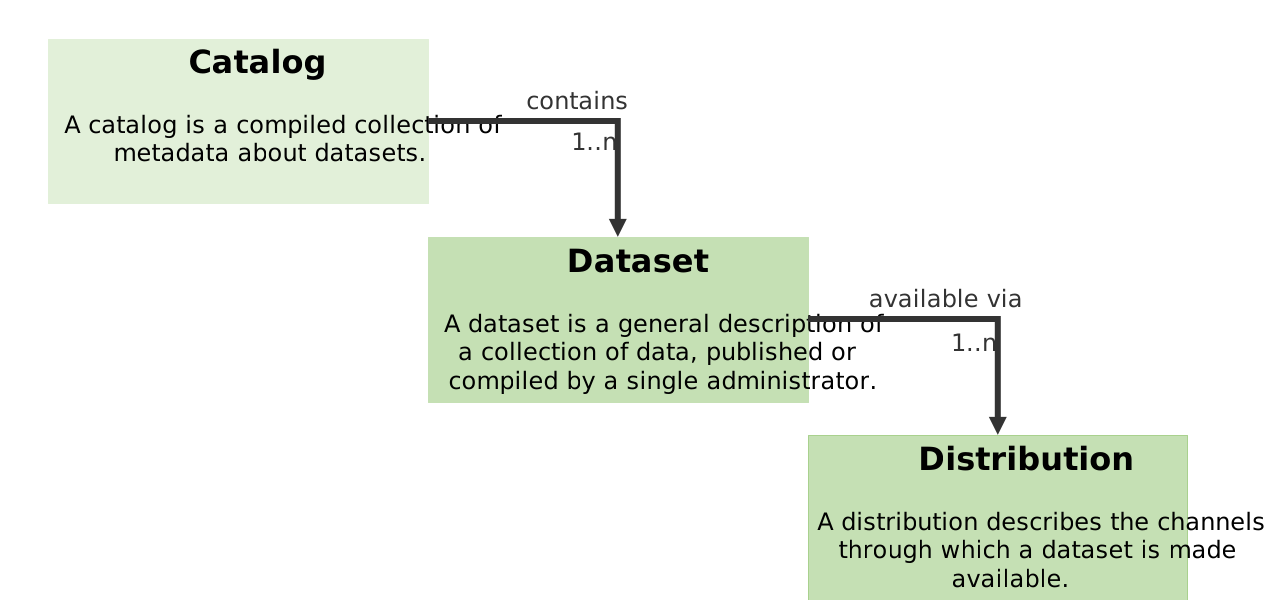
In the Dataset Register you will not find datasets themselves, but dataset descriptions. These descriptions refer to the actual datasets, the distributions. These distributions can take different forms, such as files or data dumps, for example XML, CSV or RDF, but also APIs such as OAI-PMH, SPARQL or SRU. When a dataset description is retrieved from the source, it is validated and stored in its own graph based on DCAT:dataset. The URL of this graph corresponds to the IRI of the dataset. Descriptions that have been submitted according to schema.org/Dataset are automatically converted to DCAT. More information about this data model can be found on the data model page. The image below shows how dataset descriptions and data relate to each other.
What conditions apply to the use of datasets?
The use of the SPARQL endpoint and website of the Dataset Register is freely accessible to everyone. You can search the dataset descriptions without any barriers.
The dataset descriptions are usually made available by heritage organizations under an open license, often CC0. You can find this license in the required property schema:license. Use data only according to the specified license conditions. Note: the license applies to the metadata of the datasets. The underlying collection objects may be subject to a different and sometimes more restrictive license.